

Save the shark
Your Support is important
Sign Our Petition!
The problem
Sharks and rays, existing for over 420 million years, are fish characterised by a cartilaginous skeleton, five to seven gill slits on the head’s sides, and pectoral fins not fused to the head. Their skin is protected by dermal denticles, enhancing fluid dynamics, and they have replaceable teeth. While most sharks inhabit saltwater, exceptions like the bull shark and river shark live in both saltwater and freshwater. Apex predators like the tiger shark, blue shark, great white shark, mako shark, thresher shark, and hammerhead shark dominate the underwater food chain.
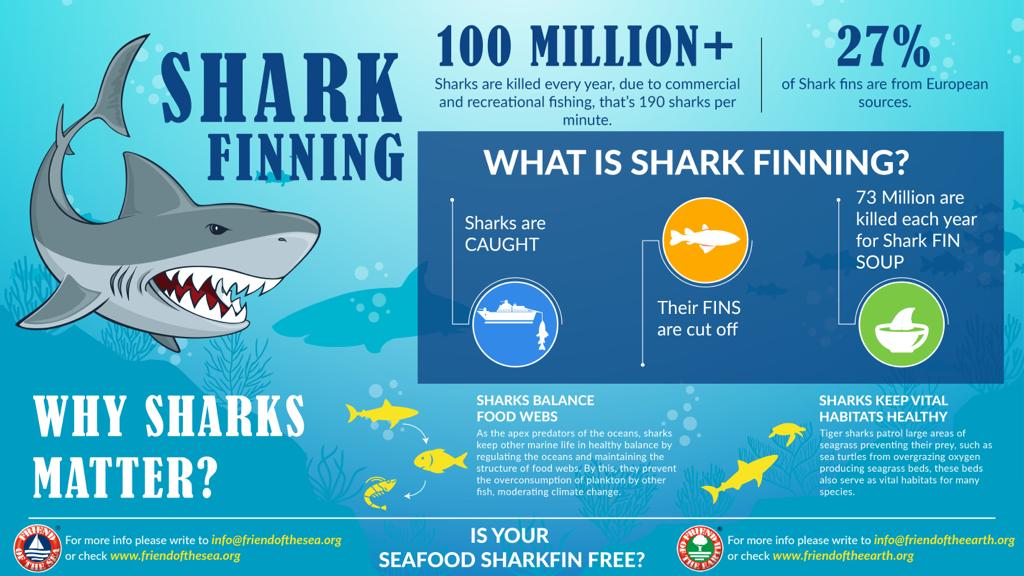
Fisheries target sharks and rays for their lucrative fins and gill plates, especially prized in Asian countries. European nations lead the market for shark meat. Additionally, sharks often become incidental bycatch in fishing nets. The top 20 shark-catching countries, including Indonesia, Spain, India, Mexico, and the United States, caught over 600,000 metric tons annually between 2007-2017. It’s estimated that up to 100 million sharks are caught globally each year. A TRAFFIC report reveals that between 2000-2016, 16,177 metric tons of shark fin, valued at approximately USD294 million annually, were imported globally, with four countries – Hong Kong SAR, Malaysia, mainland China, and Singapore – importing 90% of these products. Brazil, Spain, Uruguay, and Italy collectively accounted for 57% of global shark meat imports during the study period.
Environmental Consequences
Irresponsible and unsustainable fishing practices have caused alarming declines in numerous shark species, with a quarter of the approximately 1,150 species currently at risk of extinction. Due to their slow growth, late maturity, and long reproductive cycles, sharks are highly susceptible to overfishing.
Conservation efforts have not been sufficient, with 17% of sharks and rays listed as Critically Endangered, Endangered, or Vulnerable, and 13% as Near Threatened. Additionally, 47% are categorised as Data Deficient. Only 23% of all shark and ray species are considered Least Concern.
Hot spots for threatened species include the Coral Triangle in the Indo-Pacific and the Mediterranean, where around 50% of all shark and ray species face extinction.
Sharks are vital top predators in marine ecosystems, crucial for maintaining healthy oceans and supporting communities dependent on marine resources. Ironically, this includes the fishermen targeting them.
Maintaining shark biodiversity is crucial for various reasons:
- Ecological Balance: Sharks regulate marine populations by preying on sick and weak animals, preventing disease spread and enhancing genetic fitness. This contributes to the overall health of marine ecosystems.
- Recreational Value: Shark-related activities like cage diving attract tourists and divers, offering unique experiences in their natural habitat.
- Economic Importance: Shark ecotourism and fisheries support coastal communities globally, offering employment opportunities. Unsustainable harvesting could jeopardise these industries and livelihoods.
- Biodiversity Support: Sharks, with over 400 species (or 1,150 including rays), contribute to marine biodiversity as top predators, maintaining the diversity of other species.
Activities and Initiatives of the World Sustainability Foundation
The World Sustainability Foundation’s Friend of the Sea project provides financial support to Love Wildlife Foundation, Thailand (parent organization to the Aow Thai Marine Ecology Center (ATMEC)), a foundation under the laws of the Kingdom of Thailand and based in Thailand. ATMEC is a marine science-focused initiative, aimed at providing education in marine biology and ecology to students of all ages. ATMEC also prioritises conducting original research, conservation projects, and coral restoration activities, in the Gulf of Thailand.
- Purchase of raw materials for construction of artificial reefs
- Purchase of prefabricated materials for the construction of artificial reefs
- Deployment of a minimum of 3.000 kg of artificial substrate for restoration
- In-situ attachment of corals and maintenance of structures
To conserve shark populations, responsible fisheries management and trade regulations are vital to address overfishing. Understanding the stakeholders involved is essential for effective management.
Ultimately we need to focus on three primary goals if we hope to reverse the downward trend:
Responsible consumption
Sustainable management
Responsible trade
WSO Activities and Initiatives
The World Sustainability Organization, under its Friend of the Sea programme, supported the Maldives Whale Shark Research programme’s community focused conservation initiatives and its dedication to learning more about whale sharks and conserving the rich biodiversity and fragile marine ecosystems that both whale sharks and the Maldives community depend on.
The Friend of the Sea’s Sustainable Fisheries and Fleets certification programme promotes the responsible harvesting of marine resources, including sharks. In order to qualify for certification, fishing fleets must use sustainable, legal fishing practices; they must not target overexploited species; and they must not have any bycatch listed as Vulnerable or worse on the IUCN Red List.
Friend of the Sea has also launched a successful Change.org campaign which led Just Eat, Deliveroo and Menulog to take shark fin soups off their menu.
Call to Action
Friend of the Sea encourages shark fishing companies that employ Sustainable fishing practices, as well as companies that supply sustainably sourced shark products, to apply for Friend of the Sea Sustainable fisheries and fleets certification. Importers and consumers alike are becoming more environmentally conscious and like to know that the seafood they purchase is harvested sustainably. The Friend of the Sea label helps consumers to choose sustainably harvested shark products rather than simply avoiding shark products altogether for ethical reasons. Friend of the Sea certification encourages Sustainability in the fishing industry and serves as a marketing tool to help companies promote their environmental efforts.
You can also contribute to shark conservation by signing Friend of the Sea’s petition to take Mustelus asterias (Starry Smoothhound, Palombo) off the menu. We also revamped the Change.org petition which led Deliveroo and Just Eat to take shark fin soups off their menu by asking them not to collaborate with those Chinese restaurants proposing Shark Fin soups on site.
How you can help save the Sharks
Friend of the Sea encourages seafood companies who financially benefit from fisheries that are putting albatrosses and other seabirds at risk of extinction to engage at implementing Sharks bycatch reduction methods.
Longlines and trawlers are mostly catching tuna, swordfish, cod, hake, shrimps and herrings. Check with your seafood provider and at restaurants if those species are caught by Friend of the Sea certified fleets.
You can support the Save the Sharks campaign by signing the Change.org petition, which will help Friend of the Sea convince seafood and fishing companies to make a change that benefits both the fishing industry and conservation.
Together, we can save these magnificent predators from extinction.