
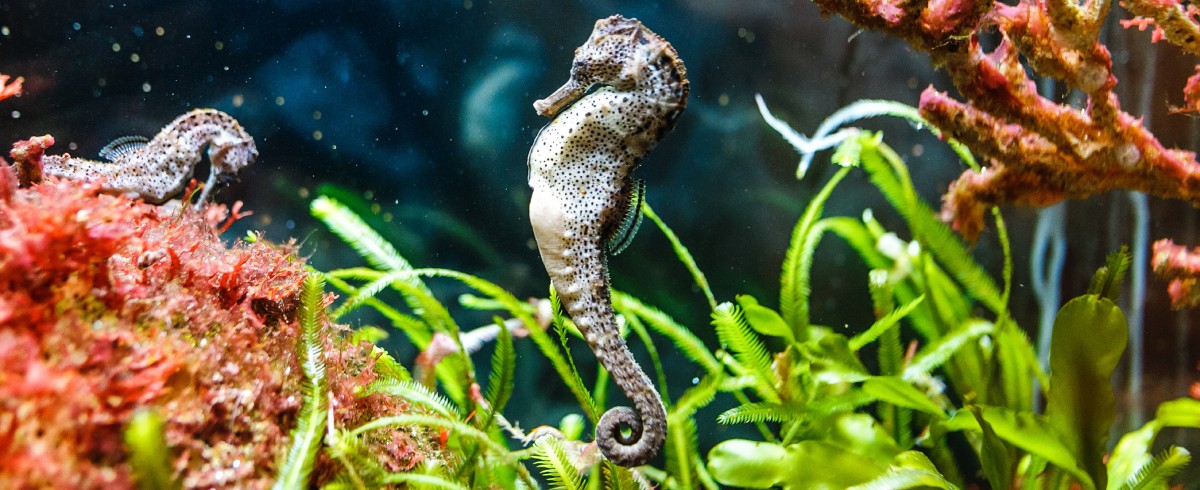

Save the seahorses
Your Support is important
Sign Our Petition!
The problem
One distinctive trait of seahorses is male pregnancy: unlike females, males carry embryos in a specialised structure known as the “brood pouch” and release the fry upon hatching. This unique reproductive strategy allows females to produce more eggs, leading to rapid reproduction.
Seahorses are primarily found in shallow tropical and temperate saltwater environments worldwide, including estuaries, coral reefs, seagrass beds, and mangroves.
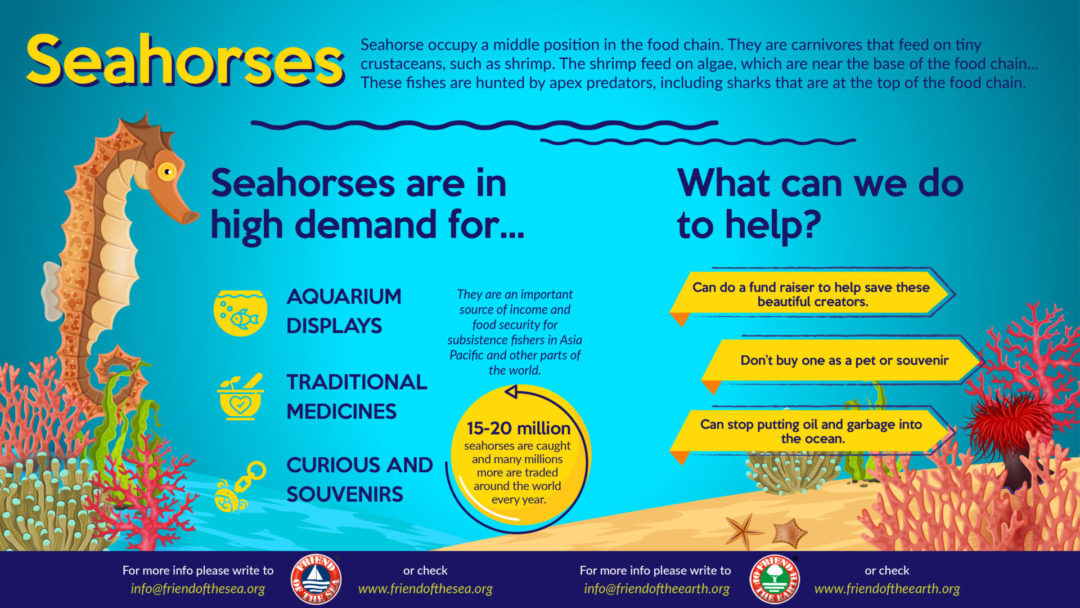
There are various factors contributing to the decline in seahorse populations. Legal and illegal capture for decorative purposes, such as souvenirs, aquarium trade, and traditional Chinese medicine, poses a significant threat. It’s estimated that approximately 37 million seahorses are captured annually for medicinal purposes alone.
Seahorses are often caught incidentally in commercial fishing operations. Additionally, their habitats are threatened by coastal development, resulting in pollution and deforestation, which adversely affect their growth and reproduction.
Environmental Consequences
Among the 46 species listed in the IUCN database, 17 are currently considered threatened, including Seahorse, Pipefish, and Sea dragon species. Seahorses are naturally vulnerable to extinction due to several factors. They have patchy distribution across waters in over 130 countries, coupled with low birth rates and extensive parental care. Human activities such as fishing and urban development further degrade and destroy their habitats. Seahorses are also intentionally harvested for the curio and aquarium trade, as well as for traditional medicines, both domestically and internationally, with most trade originating from Asia.
Possible Solutions
There are many steps that can be taken to prevent the extinction threat to seahorses which are a flagship species of marine environments.
Firstly, habitat/site and resource protection and management would ensure continued free movement and propagation of the seahorses.
Besides, species management by controlling the harvest and trade of seahorses is crucial to safeguard them. 150 countries in the world have signed the Convention on International Trade in Endangered Species (CITES) which prevents commercial trading of wild species like seahorses if their existence is under threat. The Hippocampus species are currently listed under CITES and these legislations need to be implemented. Moreover, research on the taxonomy, population trends, habitats of the seahorses is a call of the day.
Finally, awareness should be promoted about the seahorses through formal education and campaigns.
WSO Activities and initiatives
WSO’s Friend of the Sea project is taking the following initiatives to preserve the seahorses as part of their mission of certifying products coming from Sustainable fishing and aquaculture:
- Communicate with governments, non-governmental organizations, media, and academic institutions to make them aware of the distressing situation of many seahorse species.
- Liaise with aquaculture and fishing companies, industrial and other relevant business leaders to remind them of their duties towards environmental sustainability and urge them to follow eco-friendly policies.
- Participating and organizing various webinars, symposiums, and conferences to educate local communities on the importance of seahorses so that they become vigilante against their illegal trading and also help in data collection related to their habitats and population trends.
- Launch awareness campaigns on change.org or similar platforms.
Call to action
Promote the establishment of marine protected areas which would limit commercial activities such as fishing, tourism, etc. so that habitats of seahorses would not be disturbed.
Allocate enough funding to conservation biologists, ecologists, evolutionists and molecular biologists who are working on seahorses.
Purchase only Friend of the Sea certified Sustainable products, including seafood, UV Creams, Omega3.
Sign Friend of the Sea Petition on Change.org.