
Save the albatross
Your Support is important
Sign Our Petition!
The problem
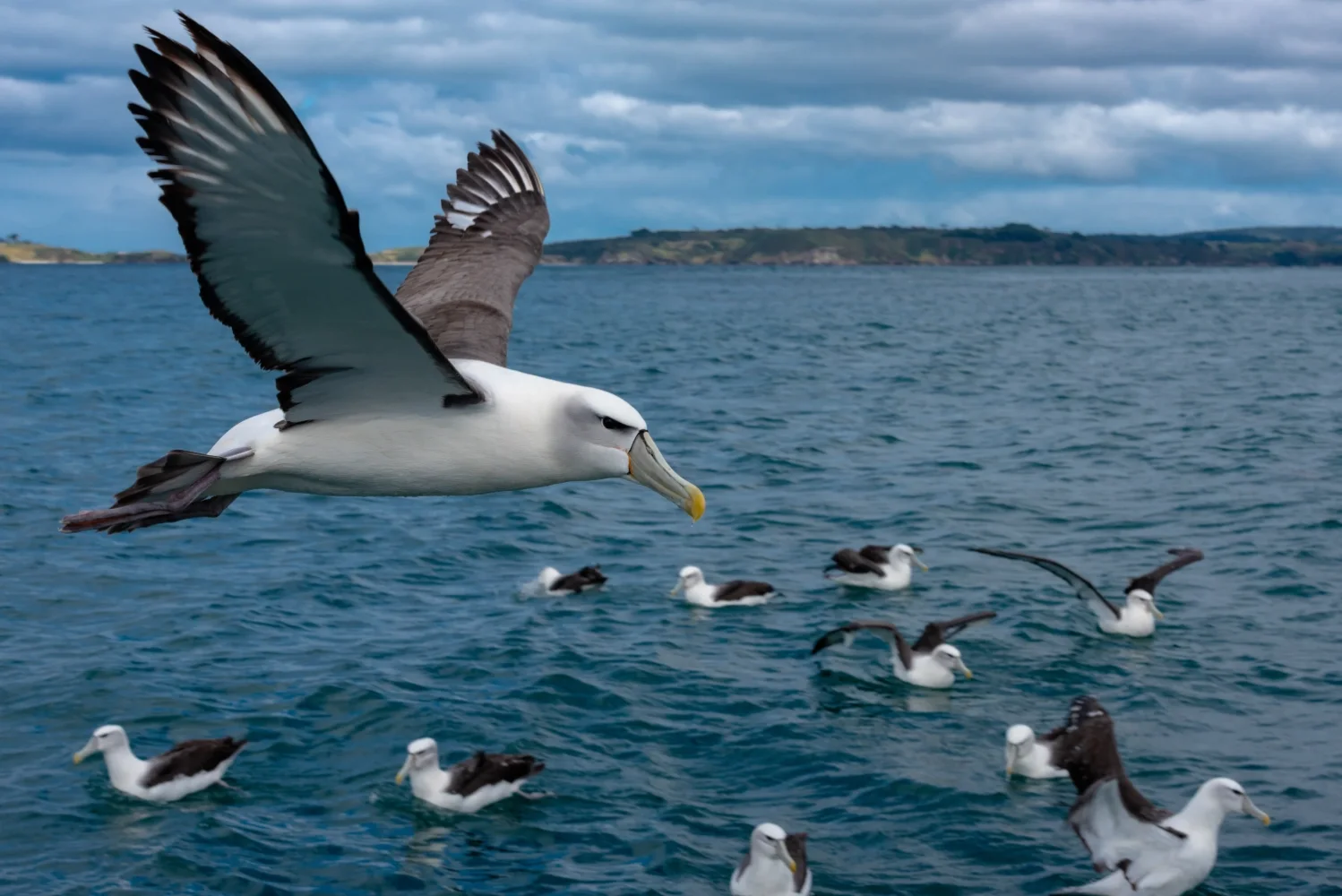
Albatrosses are iconic seabirds that spend most of their life at sea, coming ashore primarily to breed. These long-lived ocean wanderers however face many human induced threats:
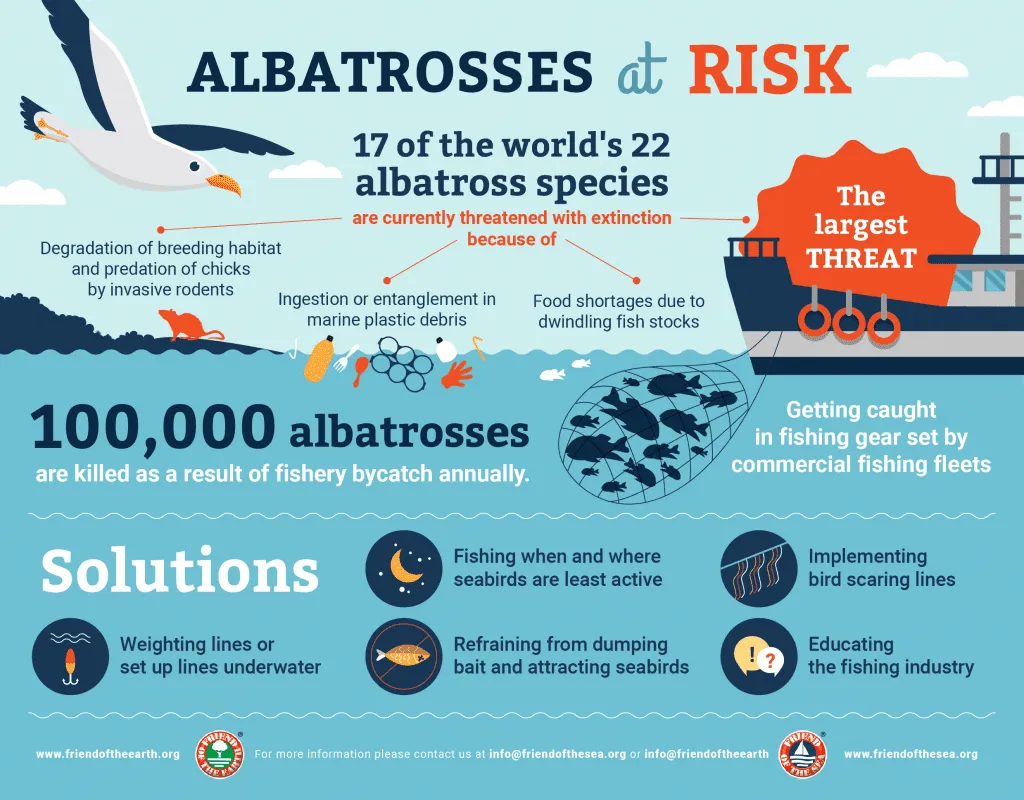
- Food shortages due to dwindling fish stocks;
- Degradation of breeding habitat;
- Predation of chicks by invasive rodents that have been introduced on breeding islands;
- Entanglement and ingestion of marine plastic debris, ultimately resulting in them starving to death.
However, the largest threat that albatrosses face is getting caught in longline and trawlers fishing gear.
Longline fishing vessels deploy lines extending over 100 kilometres, each with tens of thousands of baited hooks. Albatrosses scavenge around the vessels, seizing bait before it sinks, but often get caught on hooks and drown.
discard unwanted offal overboard, attracting albatrosses. During feeding frenzies, birds can become entangled in fishing nets or collide with trawl cables, getting caught and dragged along with the haul.
Environmental Consequences
Between 160,000 and 320,000 albatrosses die yearly due to fishing gear. With albatrosses facing various threats and some species breeding only once every two years, their mortality rate surpasses their reproduction rate. This unsustainable situation is leading to rapid declines in many albatross populations, putting these iconic seabirds at risk of extinction. Due to ongoing bycatch and other dangers, 17 of the world’s 22 albatross species are currently threatened with extinction, with nine listed as endangered or critically endangered on the IUCN Red List.
Possible Solutions to Save the Albatross
There are several cheap, yet effective solutions that can be implemented to address the problem of seabird bycatch resulting from longlining and trawling fishing practices, including:
- Bird scaring lines, also known as streamer or tori lines, are ropes with colourful streamers trailing behind fishing vessels to deter seabirds when baited hooks are set. This cost-effective measure can reduce seabird bycatch by up to 100%.
- Setting lines during periods and in areas of low seabird activity can also minimise interactions between seabirds and fisheries, reducing seabird mortality. Fishing at night when birds are not actively foraging and seasonal closure of fishing grounds near seabird breeding colonies are effective strategies.
- Weighting lines or deploying them underwater speeds up the sinking of baited hooks, reducing seabird access and thus bycatch. Avoiding dumping offal overboard and dyeing bait to make it less visible to seabirds further decreases attraction to fishing vessels.
- Educational campaigns targeting the fishing industry are crucial for implementing effective mitigation measures. Encouraging fishing companies and crews to adopt these measures not only aids seabird conservation but also benefits the industry by maximising target fish catch.
Activities and initiatives of the World Sustainability Foundation
The World Sustainability Foundation’s Friend of the Sea project provides financial support for the Galapagos Conservation Trust (GCT), the only UK-registered charity to focus solely on the conservation of the Galapagos Islands. This group of islands is one of the most unique and ecologically important, but vulnerable, areas in the world. By raising funds and awareness, we are helping GCT to support and deliver projects in Galapagos and respond to key threats facing the Islands. GCT focuses on restoring natural habitats, protecting threatened species, and driving Sustainable solutions, helping to contribute to the overall management of this unique ecosystem.
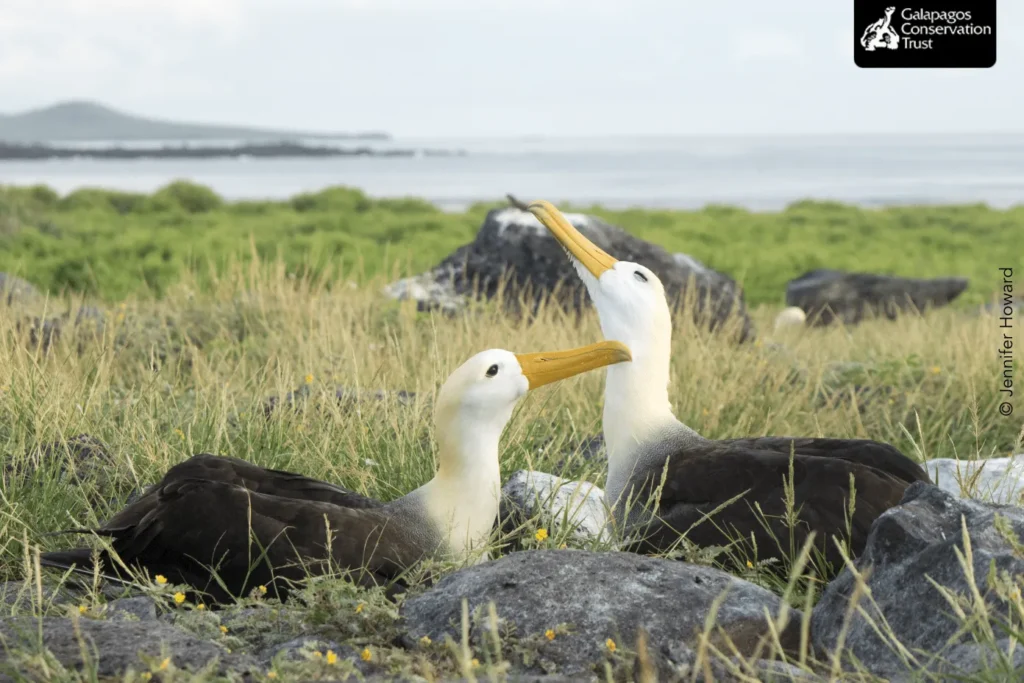
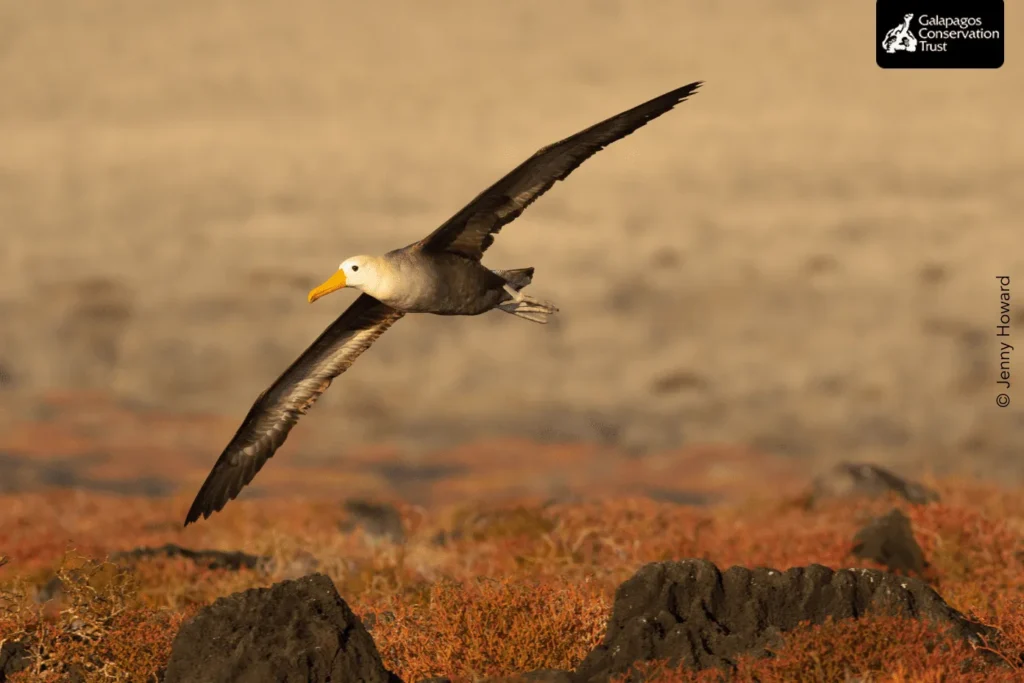
The aim of our collaboration is the following:
- Classify an estimated 2,000 plastic items in the Galapagos Islands collected from on-the-beach or drone surveys to improve our understanding of key sources of pollution and major risks to albatross and other oceanic species;
- Cover the time of an early career or student researcher to support this study.
How you can help save the Albatross
Friend of the Sea encourages seafood companies who financially benefit from fisheries that are putting albatrosses and other seabirds at risk of extinction to implement effective albatross bycatch reduction methods.
Longlines and trawlers are mostly catching tuna, swordfish, cod, hake, shrimps and herrings. Check with your seafood provider and at restaurants if those species are caught by Friend of the Sea certified fleets.
You can support the Save the Albatross campaign by signing the Change.org petition, which will help Friend of the Sea convince seafood and fishing companies to make a change that benefits both the fishing industry and conservation.
If we all work together, we can save the magnificent albatross from extinction.